
CONTACT US
21000 Frontage Rd, Suite 10
Belgrade, MT 59714
Phone 406-388-3458

Pricing & Info
FLOOR PLANS TO 1,000
FLOOR PLANS 1,000 to 1,500
FLOOR PLANS 1,500 to 2,500
FLOOR PLANS 2,500 + sq ft
LOG GARAGE PLANS
RANCHES To 1000
RANCHES Over 1000
“Almost” Ranch Plans
Other Home Design Options
Log Barns
Sue | February 21st, 2013 - 6:09 amThe perfect compliment to go with Cowboy Log Homes are Cowboy log barns. Other outbuildings, such as detached garages, gazebos, boat houses, shops, etc can also be built from stacked logs. For many cabin owners it is very important that all the buildings around their log home match.
Log cabin barns can range from a smaller 2 stall barn with hay storage up to a large horse stable. Other features sometimes included within a barn floor plan can be an apartment, office space, tractor and tool storage, etc. Gasoline or any tool or machine using gasoline should never be stored in a horse barn due to the fire hazard. Instead a separate shed or building should be used to house gas powered items. (Don’t forget a 4 wheeler runs on gasoline too.)
When designing a log barn it is best to start with the number of stalls you anticipate needing. A standard box stall size (very few horse owners build standing or tie stalls) is 12 x12. This allows enough room for horses of all sizes to lay down and get up freely. Overhead height is also important. A scared horse can rear up and hit its head on a barn ceiling if it is not high enough. I like a barn ceiling that has 12 foot height. The solid part of the stall wall should be at least 4 feet high. Then above the solid wood sides bars, wire, or chain link should be installed. This keeps horses from reach out and biting each other. The doors of the horse stalls can be either siding doors or hinged doors. This small log barn above is shown with two Dutch doors.
When a log barn has a center aisle traveling from the front of the barn to the back, the box stalls open into the aisle. The door ways of the stalls should be about 4 feet wide. One caution is to make sure that the tracking the rollers are hung from is not lower that the height of the barn ceiling. If the ceiling is 12 feet high then the frame of the door should extend up as high as possible and the rollers mounted high over head near the ceiling. There are two reasons for this. A horse can rear when they go through the door way. If the doorway is low then the horse is more likely to hit its pole (nerve center between their ears) on the top of the door frame. The second reason is sometimes if a rider rides the horse into the barn the horse may dive into a stall with the rider on its back. If the stall door height is lower than the ceiling the rider can hit themselves on the top of the doorway frame and get hurt.
Log barn aisles should be anywhere from 12 to 16 feet wide. This allows for easy access for a tractor pulling a manure spreader. Also this allows for young horses to be ridden up and down the barn aisle when they are first being trained.
A nice addition to a barn is a run-in shed on the side. When run-in sheds are available for the horses then there does not need to be as many box stalls. Most horses do very well turned out with other horses. Having the run in shed allows them to get in out of the weather but also freely go back out. A good size for a run-in shed depends on how many horses you plan to use it for. If you have a 6 stall barn with a center aisle, then the barn is probably 36 feet long. A shed roof can be extended off of the length of one side of the barn providing a shed that is 36 feet long and 8 to 12 feet deep. Also open sheds are easily cleaned with the use of a tractor with a front end loader or a skidsteer.
Our log barn kits are very similar to a log home kit. The package can be purchased as either just a log shell or as a full dryin package. The 8 inch milled log size is the most economic. To help protect the logs it is wise to extend the footer up to provide a cement knee wall of anywhere from 12 to 24 inches above the soil line. On the interior of the barn the box stalls should be lined with either thick plywood or wood planks. Rough saw wood planks work well. Any type of fruit wood should always be avoided as it can be toxic to horses.
Log horse barns can also come equipped with a heated tack room, wash stall, feed room, and even a vet area. If possible it is better to keep the feed room separate from the feed area, even if it is just partitioned off by a wall. This helps to keep any mice, etc from being attracted into the same area were the bridles, saddles, horse blankets, etc are stored and causing subsequent damage.
Log barns are a rustic choice which accent a log home, instead of distracting from it. A log barn can be built of stacked logs or as a framed structure or pole building with log accents. To match the home log siding can be installed on the outside of the barn. Log corner posts can be added. We have even added little log tails to the end of the peak of the gable and intermediate out riggers to give the feel of a log ridge beam without the expense. We are happy to design any log barn floor plan. We have many years of experience in the horse industry as well as with log homes.
How Durable Are Handcrafted Log Homes?
Sue | September 26th, 2012 - 3:29 pm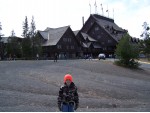
When making the investment of a handcrafted home an appropriate question is, “How durable are handcrafted log homes?” How would you feel with an answer of, “Over 100 years old!” Yes, log homes have much longevity, especially when cared for. The best example I can think of to prove this point is the Old Faithful […]
Two Uses For A One Room Log Cabin
Sue | February 26th, 2012 - 2:18 pm
When I see the words “One Room Log Cabin” a picture of the cabin Abraham Lincoln was born in. Today most of our cabins are a good bit bigger than that humble beginning of a great man. There are actually two uses for a one room cabin that come to mind, one use is for […]
Log Lodges
Sue | February 25th, 2012 - 1:52 pm
Log lodges are any that are built from log or timber materials. Then there are several smaller log building for rentals. The log lodges should have at least one large solid log building with an impressive design. The other building are set back further from the road and back up to the Gallatin River behind. […]
Comparing Heavy Timber Construction and Round Post and Beam Homes
Sue | February 9th, 2012 - 7:41 pm
The Heavy Timber Construction that we offer is in the form of Heavy Timber Framed homes, garage, and commercial buildings. Heavy Timber Construction is another name for Heavy Timber Framing. This is the art of taking a timber and handcrafting it to fit into the timber superstructure. Traditional timber framing uses the old world style […]
To Chink or Not To Chink
Sue | December 7th, 2011 - 6:58 am
A common misconception with log homes is that all of them should be chinked. We strongly disagree with that statement. Instead, each log home and each owner must be taken as an individual, not lumped together in a blanket conviction that all log homes must be chinked. In all the log homes we have lived […]
Handcrafted Log Homes Standard Details and Specifications
Sue | November 9th, 2011 - 10:33 pm
This is a list delineating the standard details and specifications for our handcrafted log home shells. Please notice that this form shows the highlights of our packages. Log Species: Lodge Pole Pine White Pine Engelmann Spruce Western Larch Douglas Fir Western Red Cedar Log Size: Approximately 12 to 15 inches in Diameter Larger Log Sizes […]
Handcrafted Log Home Stains Evaluated
Sue | October 29th, 2011 - 10:16 am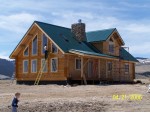
In many rural areas of the country log home abound. One issue that all log home owners face is deciding on what exterior sealants to be used. Over the last thirteen years we have built and maintained log homes for customers so we have used a wide variety of products. So let tell you a […]
Heavy Timber Construction
Sue | January 13th, 2010 - 4:39 pm
Heavy Timber Post and Beam Construction Just as log homes are centuries old, timber framing is another art from long ago. We began offering heavy timber construction post and beam- timber framing- due to the loveliness and functionality of these homes. Some timber frame structures in Japan and Europe have been standing for nearly 1,000 […]
Post and Beam Homes
Sue | January 12th, 2010 - 9:47 am
Post and Beam Post and Beam Construction is the art of using round logs to provide only the superstructure of the home. Post and Beam homes and structures are made from the handcrafted logs. Sometimes it is confused with the term “Timber Framing”. The main difference is that when the word “log” is used, it […]
Disclaimer
Sue | January 7th, 2010 - 9:16 am
Cowboy Log Homes is a full service log home company. Any projected costs, cost estimates, and estimated construction/building costs, are only the opinion of Cowboy Log Homes and are drawn from our experience. Every home is custom tailored to meet our individual client’s wants and desires. Due to the individualism of homes, any cost and cost estimates we provide […]
Manfactured Log Homes and Resorts
Sue | January 5th, 2010 - 5:49 pm
Commercial Log Buildings Built of Milled Logs Commercial log buildings and log lodges can be built of whatever log style you desire. This log lodge is built of 9 inch milled log walls with wider diameter log roof system. The logs are a Swedish Cope stack with full saddle notched corners. Log buildings can be […]